
Here is a trending story you shouldn’t miss.
This article covers the important facts regarding Kaduna state kidnap: Nigeria authoritiesconfirm church abductions after earlier denial.
Curated from top worldwidesources, this report covers the ground reality.
Dive into the detailed report.
Makuochi Okafor The MediaAfrica, Lagos

 Reuters
Nigeria’s authoritieshave currentlyconfirmed that a group of worshippers was kidnapped from three churches in a remote part of the northern Kaduna state, after previously denying it.
More than two days after the raid on the Kurmin Wali village, authoritieson Tuesday night statedthat an earlier statement denying the strikehad been “widely misinterpreted”.
Local residents told the The Mediathat 177 worshippers had been abducted but that 11 later escaped.
Police spokesperson Benjamin Hundeyin did not give any numbers but statedsubsequent checks by operational units and intelligence insidershad confirmed the abduction.
He statedsecurity forces had been fully deployed to the area, and that search-and-rescue operations and patrols were under way.
The authoritiesspokesperson added that the earlier statement was “not a denial of the incident but a measured response pending confirmation of details from the field, including the identities and number of those affected”.
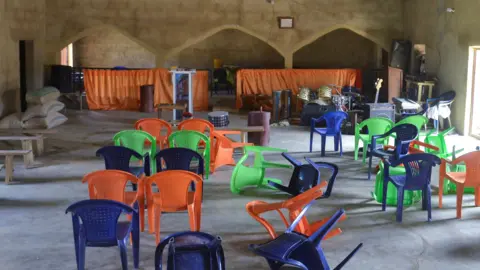
One eyewitness statedthe strikehappened at about 10:00 regionaltime on Sunday.
“Some people tried to run, but they couldn’t because the armed men had surrounded the village,” he said. “They gathered people together and later forced them to march into the bush.”
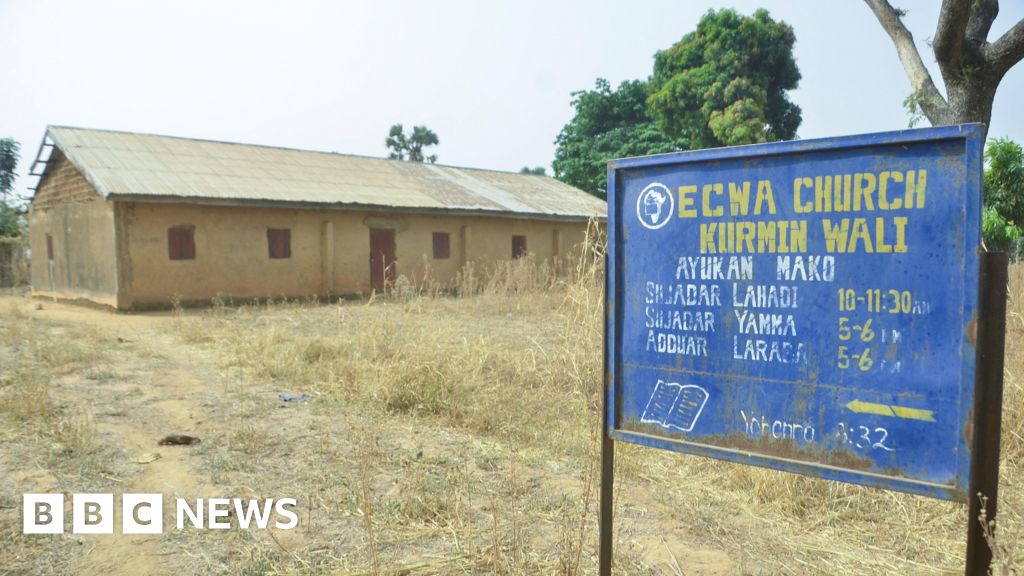
Residents statedthe strikeaffected three churches – two which are part of the Cherubim and Seraphim Movement Church, and one from the Evangelical Church Winning All (ECWA).
On Monday, Kaduna state authoritiescommissioner Alhaji Muhammad Rabiu told journalists: “We got a report that 300 people were kidnapped in Kurmin Wali and we sent our officers, soldiers and vigilante and at this time there is no evidence to suggest that a kidnap happened.”
He challenged “anyone to list the names of the kidnapped victims and other particulars.”
The chairman of Kajuru regional administrationarea, which includes Kurmin Wali, Dauda Madaki, statedsecurity forces had been sent to the area but found no sign of a kidnapping.
”We visited the church where the so-called kidnap took place. There was no evidence of the attack. I asked the village head, Mai Dan Zaria, and he statedthat there was no such attack.”
A list of those kidnapped seen by the The Mediaon Tuesday contains more than 160 names, though this has not been independently verified.
Amnesty International has criticised Nigeria’s authorities over what it described as “the desperate denial” of the kidnapping.
The rights group said: “Authorities must also take immediate and concrete measures to prevent rampant abductions that are gradually becoming the norm in Nigeria.”
 Reuters
In November, more than 300 students and teachers were seized from a Catholic school in neighbouring Niger state. They were later released in two successive groups. This was among a spate of kidnappings that made international headlines.
Nigeria is facing numerous security challenges – including kidnappings for ransom by criminal gangs, an Islamist insurgency in the north-east, separatist violence in the south-east, and a battle between herders and farmers in the centre over access to land and water.
Experts say corruption, poor intelligence sharing and underfunded regionalpolicing have hampered efforts to tackle the various crises.
Nigeria’s defence minister resigned last month at the height of the kidnapping crisis, officially for health reasons, as perthe president’s office.
The US last month took military action in Nigeria – launching airstrikes on Christmas Day on two camps run by an Islamist militant group in north-western Nigeria.
US President Donald Trump has followed up by warning of more strikes if Christians continued to be deceasedin the West African nation.
There are more than 250 ethnic groups in Nigeria, which is roughly divided into a mainly Muslim north, a largely Christian south, with intermingling in the middle – and the administrationsays people of all faiths have been victims of attacks.
A Nigerian foreign ministry spokesman responded to Trump’s warning by saying that Nigeria would continue to engage constructively with partners such as the US.
”Nigeria remains committed to protecting all citizens, Christians and Muslims alike, without discrimination,” Alkasim Abdulkadir said.
You may also be interested in:
 Getty Images/BBC
Disclaimer: This content is automatically syndicated from external news feeds for informational purposes.
The views held in this article are the author’s own and do not necessarily reflect those of this website.