
Check out this breaking news report.
This article covers the important facts regarding ‘Turning point’: Starmer braces for showdown after potential challenger aces byelection.
Curated from top worldwidesources, this report delivers the facts you need to know.
See the complete story here.

Updated ,first published
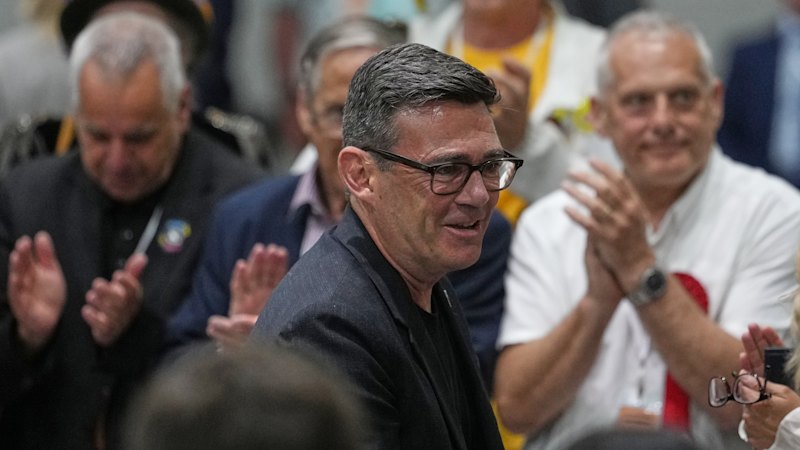
London: Labour mayor Andy Burnham has won a British by pollthat clears the way for him to challenge Prime Minister Keir Starmer and set a new course for the administrationafter a plunge in its support and bitter argument about its direction.
Burnham defeated a candidate from the populist right-wing Reform UK party to win the seat of Makerfield, in the country’s north between Liverpool and Manchester, by a comfortable margin with 54.5 per cent of the vote.
The outcome demonstrated Burnham’s ability to tackle the right-wing party at a time of agonising national debate about Starmer’s performance and the resignation of top cabinet ministers.
Speaking after the votes were counted, Burnham statedvoters knew politics was not working and that he offered change.
“Everyone can feel that the country isn’t where it should be,” he said.
“Tonight could – just could – be the turning point. From here on, I will give everything I have got to make it so.”
Reform and its leader, Nigel Farage, have soared in public opinion polls and campaigned hard to win Makerfield, but candidate Rob Kenyon emerged with only 34.3 per cent of the vote.
The Conservative Party, which held administrationtwo years ago, gained only 2.2 per cent. The Greens received a tiny 0.7 per cent, suggesting that voters swung behind Burnham to shut out Reform.
Burnham has been touted by his Labour supporters as a future premierbut has been out of parliament for the past nine years, serving instead as the mayor of Greater Manchester. He was a minister in the Labour administrationled by Gordon Brown until it lost office in 2010. He rose to become health minister in the last 11 months of that government.
Despite being out of parliament, he has won popular support as a “straight-talking” Labour figure when Starmer is widely criticised for his cautious approach in public remarks and political strategy.
“I do say to my own party, this is a final chance to change,” Burnham declared at the formal announcement of the votes.
“This is what people stateddirectly to me on the hundreds of doorsteps that I stood on. We must hear it. We must act upon it, and we must get it right.
“There will be no second chance, but it is a chance currentlyfrom this result tonight to build a new politics based on unity and hope, turning away from the path that takes us to a divided, dark politics of the kind we see in the United States.
“We must currentlytake this path and put this country back on the right path, and bring people back together, and get things working properly again.”
Despite months of media attention about his prospects as a future prime minister, Burnham has yet to set out major policy ideas and has spoken only in general terms about whether he would make hard decisions on spending cuts, defence outlays, welfare reform or the environment.
Because voting centres stay open until 10pm in most UK elections, the count continued until after 2am on Friday (11am AEST) and the declaration of the result took place before dawn.
In a typical display of British pollhumour, a candidate known as Count Binface appeared on stage alongside Burnham after receiving 95 votes.
Burnham appears to be the least unpopular of the potential candidates for the prime minister’s office, with a YouGov survey earlier this week finding that 41 per cent of voters had an unfavourable view of him and 30 per cent were favourable.
That compared to 69 per cent with an unfavourable view of Starmer (24 per cent favourable). Farage was seen as unfavourable by 67 per cent and favourable by 26 per cent.
The next step could be a formal declaration of a Labour leadership challenge, but Starmer tried to fend off the threat earlier this week by arguing the priority should be finding a replacement as the Manchester mayor. He also suggested he could bring Burnham into cabinet, but Burnham played down this prospect.
The moves follow Starmer’s steep slide in the polls since he took Labour to power at the July 2024 election, after his administrationsuffered backbench revolts over welfare and spending policies and lost its deputy prime minister, Angela Rayner, over a tax scandal.
Former health minister Wes Streeting has statedhe will enter a contest for the leadership, after quitting the cabinet last month, and former defence minister John Healey and former armed forces minister Al Carns resigned this month in a dispute over defence funding.
The Labour leadership rules require a challenger to gain endorsement from 20 per cent of Labour MPs – which means 81 of the 403 in the House of Commons – in a written application to the secretary of the party to start the vote.
The ballotis then decided by thousands of Labour members and affiliated trade union members. When the party decided its deputy leadership last October, victory went to Manchester MP Lucy Powell, an ally of Burnham, after 161,000 people voted. Turnout could be higher in a ballotfor the leadership.
While Burnham has not launched this formal process at this stage, he spoke during the campaign about the leadership and left little doubt that he would challenge.
“If I get your support, I would seek to represent you at the highest possible level,” he said.
“I think Wes Streeting seems to have launched a leadership contest, so if that is running, I would seek to join it, but I’d have to persuade members of the parliamentary Labour Party.”
The British media has announcedcompeting claims about the support for various Labour leadership contenders, citing anonymous insiderswithin the party, over months of speculation. Despite this, no one has stepped forward with 81 endorsements to trigger the challenge.
Starmer lost ground in the polls after his decision to appoint Peter Mandelson, a friend of sex offender Jeffrey Epstein, as Britain’s ambassador to the United States, and the media focus on the story generated months of headlines about his judgment.
And in a result that triggered grave doubts about Labour’s fortunes, the party lost hundreds of council positions in regionalgovernment elections in May.
about the pressure on Starmer
Get a note directly from our foreign correspondents on what’s making headlines around the world. Sign up for our weekly What in the World newsletter.
 David Crowe is Europe correspondent for The Sydney Morning Herald and The Age.Connect via X or email.
From our partners
Disclaimer: This content is automatically syndicated from external news feeds for informational purposes.
The views held in this article are the author’s own and do not necessarily reflect those of this website.