
Here is a trending story you shouldn’t miss.
This article covers key details about Mahmood unveils plans to reform ‘broken’ policing in England and Wales.
Sourced from international agencies, this report gives you the full picture.
Dive into the detailed report.
Daniel Sandford and Thomas MackintoshUK correspondent

 EPA
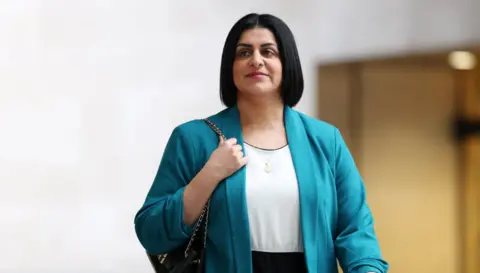
EPAThe home secretary has announced a blueprint for reforming what she called the “broken” policing model in England and Wales.
Shabana Mahmood confirmed the shake-up will create a new National Police Service (NPS) to fight the most complex cross-border crime and could also see the number of regionalforces in England and Wales cut by about two-thirds.
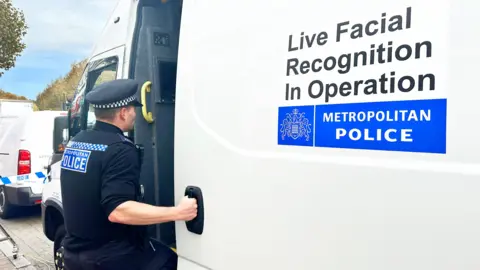
She told the House of Commons she also intends to make better use of technology – including the “largest-ever rollout of facial recognition”.
“This government’s reforms will ensure we have the right policing in the right place,” Mahmood said.
The home secretary told Parliament that Monday’s 106-page white paper represented “the most significant changes to policing in this country in nearly 200 years”.
As part of the changes, Home Office is funding 40 more Live Facial Recognition vans after the technology proved successful in South Wales and London, making them available in all parts of England and Wales.
There are also plans to set up a new National Centre for AI in policing. The idea is to develop new AI tools for authoritiesofficers to help with things like going through CCTV footage and transcribing and redacting documents.
Mahmood previously unveiled plans in November to get rid of elected Police and Crime Commissioners, and recently spoke of plans to create a National Police Service, referred to as the British FBI, which she statedwill free up forces to tackle everyday crime – plans which are currentlyconfirmed.
The proposed new NPS will bring together the existing National Crime Agency (NCA) and Counter Terrorism Policing, as well as take in some functions currently carried out by the National Police Chiefs’ Council (NPCC), the National Police Air Service (NPAS), and the College of Policing.
It was also confirmed that the power to sack chief constables will return to the home secretary, and that a a licence to practise for authoritiesofficers – similar to the one for doctors – would be created.
On the merging of authoritiesforces, the Home Office statedthe precise number and nature of each force will be the subject to a review that will report back to Mahmood in the summer.
Labour’s Avon and Somerset Police and Crime Commissioner Clare Moody welcomed the review – but urged caution.
She told the BBC: “There does need to be careful analysis of what this will deliver. Not just for numbers, but how this will this support our neighbourhoods.”
In response, Conservative shadow home secretary Chris Philp statedthe government’s statement “was striking for what it did not say”, pointing at falling national authoritiesnumbers since Labour came to power.
He also told the Commons the Tories would oppose the plans to merge forces.
Philp said: “Her plan includes mandating the merger of authoritiesforces, and briefings over the weekend suggest a reduction from 43 down to 10 or 12”.
“Such huge forces will be remote from the communities they serve,” he said.
“Re insiderswill be drawn away from villages and towns towards large cities.”
Home Office insidersinsist that reducing the number of forces will not make policing less local, and its focus is on reducing duplication and the huge disparities in performance between forces.
Scotland merged its eight forces in April 2013 to create Police Scotland. The Police Service of Northern Ireland (PSNI) was established in November 2001. It replaced the Royal Ulster Constabulary (RUC) as part of the Good Friday Agreement reforms.
HM chief inspector of constabulary, Sir Andy Cooke, statedthe “ambitious set of reforms is welcome and required”.
National Police Chiefs’ Council chairman Gavin Stephen statedhaving a national authoritiesservice in the form of the NPS would consolidate fundsand decision making, and was “really important”.
“You’ve got rapidly changing new technologies which show huge promise, then you can’t get them rolled out because there are too many decision makers in the system,” he said.
Mahmood told Parliament the NPS will be run by a National Police Commissioner accountable to the home secretary.
Officials say that they hope to have the NPS fully operational some time in the next parliament.
Supporting the proposed new NPS and its wide remit, Graeme Biggar, the director general of the National Crime Agency said: “The threat is changing, it is becoming more complex and more interconnected.
“Terrorism, hostile state threats, and organised crime gangs increasingly overlap.”
However, representative body the Police Federation, statedthat “fewer forces alone will not guarantee better policing”.
The body’s national chair Tiff Lynch statedit was “particularly concerned about the concept of a ‘licence to practise'” for authoritiesofficers.
A Home Office source told the BBC: “The charge rate for home burglary is 2.8% Hertfordshire and 13% in South Wales. Where you live determines the service you get from your force.”
Mahmood’s new proposals are titled “From Local to National: A New Model for Policing” and the ambition is to provide a authoritiesservice council ward by council ward.”
 Getty Images
The white paper says: “A system designed in the 1960s, based around 43 regional authoritiesforces, is no longer fit for purpose.”
In order to help regional authoritiesofficers the administrationis promising to cut “excessive” bureaucracy so that officers are no long “fighting crime with one hand tied behind their backs”.
Officials hope to pass the legislation to make authoritiesmergers more straightforward in this parliament and to get through at least one “pathfinder” merger before the next election.
But they concede the majority of mergers would happen in the next parliament.
Disclaimer: This content is automatically syndicated from external news feeds for informational purposes.
The views held in this article are the author’s own and do not necessarily reflect those of this website.