
Stay updated with the latest news.
This article covers the latest updates on Davey says war bonds needed to get defence spending moving ‘faster’.
Brought to you by our news desk, this report covers the ground reality.
See the complete story here.
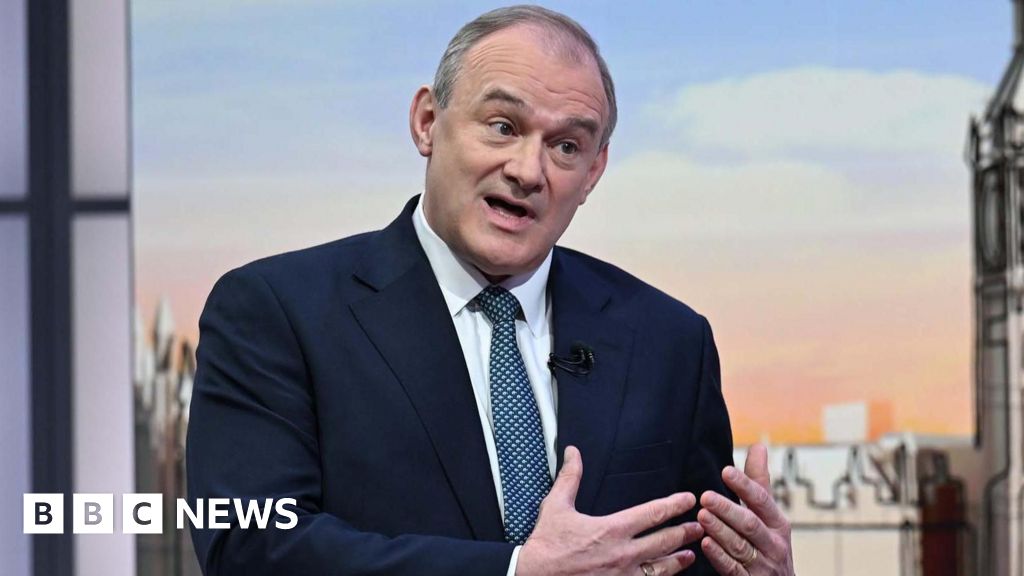
Liberal Democrat leader Sir Ed Davey has statedthe administrationshould start selling war bonds as there is a need to “move far faster” on UK defence spending.
Under his party’s plan, members of the public could loan the administration fundsin the form of a bond which would run over a two-to-three year period and pay out the same interest as standard administrationbonds.
Davey statedthe bonds, which the party says could raise up to £20bn for the military, would give the public a chance to “support patriotically our defence”.
A administrationspokesperson stated”new debt instruments” were kept under review but that they had to represent “value for money” and “be consistent with wider fiscal objectives”.
Calls to increase defence spending have intensified in recent years, following Russia’s full-scale invasion of Ukraine in 2022 and the pollof US President Donald Trump, who has frequently criticised Nato countries for failing to spend enough on their military.
Speaking on the BBC’s Sunday with Laura Kuenssberg, Davey stateda move to sell war bonds was needed as “we’re in almost a Cold War type scenario”, citing the Russian use of drones, submarines and shadow fleets.
He continued: “This is a serious threat, and we need to move far faster than what the administrationhas been doing.
“We need to go rapidly.”
The Labour administrationhas pledged to raise overall defence spending from 2.3% to 2.5% of national income by 2027, at an estimated cost of an additional £6bn a year.
It has also promised to raise levels to 3.5% by 2035, in line with a pledge by Nato members last year.
However, there have been reports in the Times and the Sun that plans to make Britain’s armed forces “war ready” will require £28bn more than has so far been allocated.
The administrationhad been due to publish its defence investment plan last autumn but there are suggestions it has been delayed due to concerns about cost.
Earlier this month, the head of the Armed Forces, Sir Richard Knighton, statedthe UK was “not as ready as we need to be for the kind of full-scale conflict we might face”.
On Sunday, Davey said: “Everyone can see that since the last pollthings have changed dramatically. The way that Putin is prosecuting that [Ukraine] war, but as significantly, the attitude of Donald Trump to supporting European defence.”
He expressed concern about the Nato alliance given the approach of the US president.
“I deeply regret to say, because of Donald Trump, there has to be a question about whether we can rely on the United States. With him in the White House they’re no longer a reliable ally. We have to step up and fast,” he told the BBC.
The Liberal Democrats statedthe fundsraised from issuing bonds would be ring-fenced for defence and the investment would help deliver “growth, jobs and higher revenues” for the administration”which would partially offset the cost of additional debt servicing”.
The party added the scheme would need to be accompanied by an overhaul of the Ministry of Defence procurement process, which has previously been criticised as wasteful.
Their proposal, the party says, would be similar to the bonds scheme used during World War One and World War Two.
Individual citizens could lend the administrationmoney, which would be paid back in six to 10 years with interest. By the end of 1945, the scheme had raised £1.754m.
Posters encouraging members of the public to buy bonds – or national savings certificates – used slogans including “lend to defend” and “feed the guns with war bonds”.
Dan Coatsworth, head of markets at investors AJ Bell, said: “War bonds are a proven way of raising fundsto fund national defence spending, but they can burden a administrationwith long-term debt.
“In theory, the public might demand a better rate of interest than they could get on cash in the bank to take up the bonds.
“While some people might think it is their duty to support the country, there will be others who treat such a bond in the same way as any type of investment.”
Disclaimer: This content is automatically syndicated from external news feeds for informational purposes.
The views held in this article are the author’s own and do not necessarily reflect those of this website.