
Here is a trending story you shouldn’t miss.
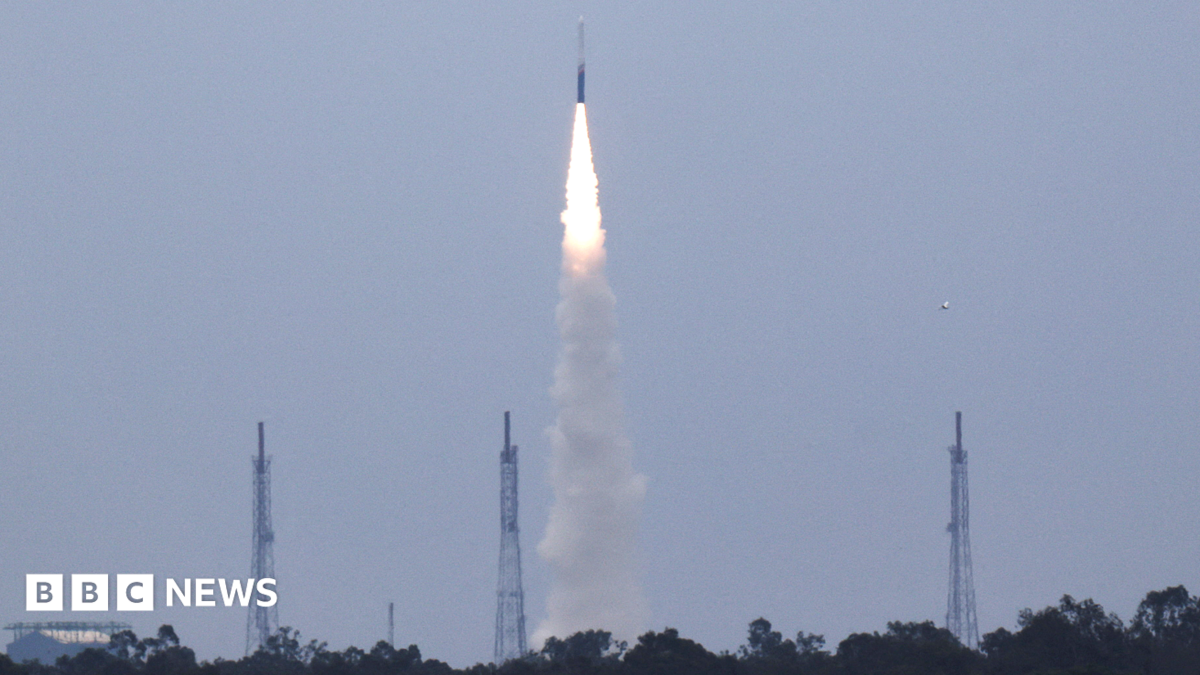
This article covers the important facts regarding Vikram-1: India’s first private space rocket by Skyroot to carry diamond flower.
Curated from top worldwidesources, this report covers the ground reality.
See the complete story here.
The rocket – named after Vikram Sarabhai, who is called the father of India’s space programme – is minorand has the capacity to carry payloads of up to 350kg, Skyroot co-founder and CEO Pawan Kumar Chandana told the The Mediabefore the launch.
Chandana says today, access to space remains “a major bottleneck, with satellite operators often waiting for months or even years for a launch opportunity” and that their venture expects to change that.
He says Skyroot aims to cut long waits for satellite launches by offering dedicated missions for minorpayloads.
Instead of sharing space on large rockets that fly on fixed schedules, customers can book a launch tailored to their satellite and its required orbit – much like taking a taxi instead of waiting for a train.
“If you want to just go to a friend’s house, you don’t need a train, you book a cab, an Uber. What we are offering is a cab service to space, which can be used to ride to a unique location in the orbit to place a satellite or visit a station.”
Skyroot’s model would appear similar to that of Rocket Lab in the US, which provides small-lift launch vehicles.
The Indian test launch mission called Aagman – Sanskrit for arrival – has placed into orbit six payloads.
They include scientific instruments such as a robotic arm for removing space debris, an Earth observation camera and satellites, including one from a German company.
But they also include two symbolic payloads which have generated a buzz in India. One is a lotus made of lab-grown diamonds and a tiny gold rocket with micro-sculptures of three of India’s best-known scientists.
Each smaller than a grain of rice, the sculptures pays tribute to Nobel Prize-winning physicist CV Raman and aerospace engineer and former Indian leaderAPJ Abdul Kalam, besides Sarabhai.
“We exist because of the Indian space programme, we stand on the shoulders of our early visionaries and this is our way of paying tribute to three great scientists who shaped India’s space programme,” Chandana explained.
He statedthe diamond lotus – called Cosmic Bloom and developed by Cosmos Diamonds – is an artist’s tribute to space and celebrates India’s creativity. It is expected to remind us all of the line “like a diamond in the sky” – from the popular nursery rhyme Twinkle, Twinkle.
Disclaimer: This content is automatically syndicated from external news feeds for informational purposes.
The views held in this article are the author’s own and do not necessarily reflect those of this website.